How to measure AI subscriptions when your work spans accounts and machines
A practical way to track AI allowances, local activity and reset dates when several agents run across a laptop and a remote Mac.
TL;DR
- A subscription limit and a machine's activity are different facts.
- A useful meter keeps account allowance, reset time, local activity and inferred activity separate.
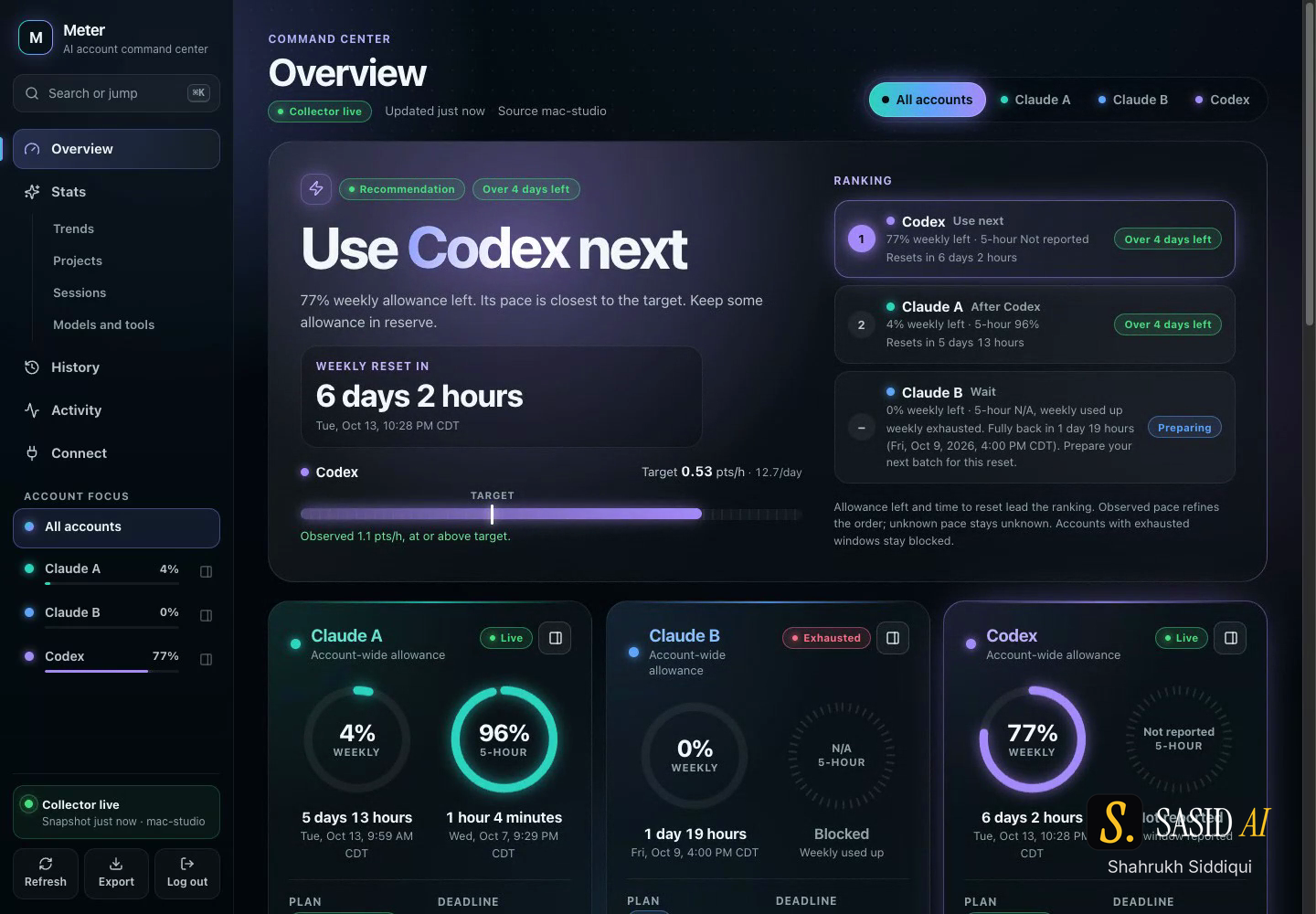
- The next account to use should follow capacity, reset timing and recent pace, with unknown fields left unknown.
- A handoff still needs context, an approved route and a check that can verify the result.
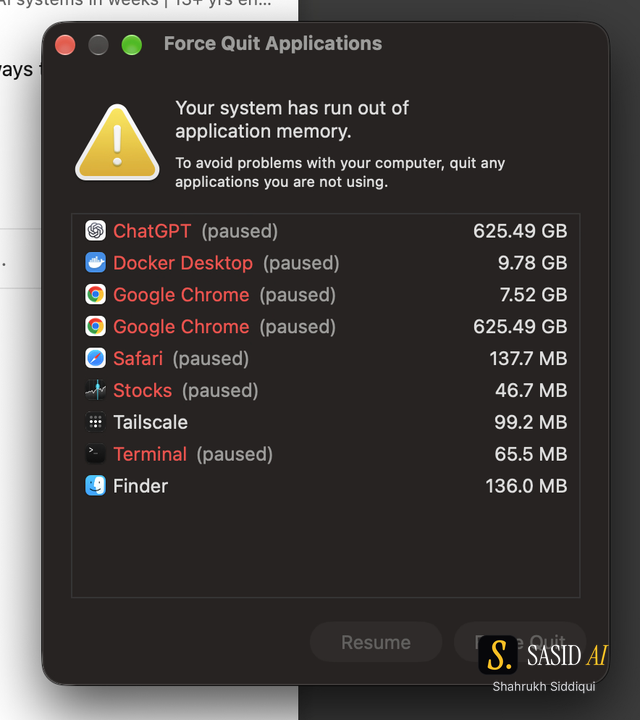
I was carrying an open MacBook around because I did not want to interrupt my AI work. The laptop was running background jobs and parallel projects, and stepping away meant worrying about lost progress. I moved the background work to an M3 Ultra Mac Studio and manage it remotely from the MacBook. I can close the laptop while the work keeps running.
That solved one limit and exposed another. I spend around $600 a month across AI subscriptions. I needed to know what each account could still do, what my machines had been doing, and which route made sense for the next task. A single percentage would hide too much.
Keep three kinds of usage apart
The first kind is an account-wide allowance. A provider may report a weekly quota, a reset instant or a plan limit. This tells me about access to a service. It does not tell me how many local sessions my Mac has started.
The second kind is machine-local activity. A collector can count sessions, model identifiers, tool names, timestamps and folder basenames from local records. It can show which projects, agents and helper agents used a machine. It cannot see a provider's private server history unless the provider supplies an authorized report.
The third kind is inferred activity. A timestamp gap can suggest that a run spent time reading, planning or coding. That can help explain a session, but it is not the provider's internal reasoning time. I label the inference and keep sessions without enough evidence unreported.
This separation is a small design choice with a large effect. It stops a local count from masquerading as an account balance. It also stops an unknown balance from becoming a false zero.
The dashboard should answer a next-task question
The useful question is not “Which provider is best?” It is “Which account can carry this task now?” I look at four signals:
- Capacity. How much allowance remains in the current window?
- Reset timing. When does that window open again?
- Recent pace. How quickly did this account consume its allowance during comparable work?
- Task fit. Does the next step need a deep review, a fast fact check or a tool call?
The decision needs a stop rule. If the data is stale, the account is offline, or the gap is too large to estimate, the dashboard should say so. A recommendation that looks precise because it silently filled missing fields is worse than no recommendation.
That is the reason I built Meter as a private account command center. It puts live allowances beside the local history of models, projects, agents and sub-agents so I can plan useful work around the subscriptions I already pay for. It is a personal operating view, not a provider invoice or a public usage benchmark.
Carry context when the route changes
A quota decision is only useful if the work survives the choice. Before I move a task from one account, model or machine to another, I want a short handoff:
- the goal and acceptance check;
- the files or records already inspected;
- the decisions that are approved;
- the open question or blocker;
- the exact next action.
The receiving agent should report what it used and what it could not verify. If the route changes from a local CLI to a hosted provider, the receipt should preserve that route change. If the task reaches a terminal state, the check should run outside the final prose when possible.
This is where an AI subscription meter meets an agent system. The meter helps me choose where work can run. The agent workflow helps me see whether the work finished. One does not prove the other.
What I would measure next
I would compare accepted changes, retries, review time and allowance use over the same kind of task. I would keep subscription allowance separate from any API list-price estimate. I would record a reset date as an observed provider value, not as a prediction. I would also keep the original task, route, output and checks together so a later review can reconstruct the decision.
The point is not to turn personal activity into a leaderboard. It is to make the next handoff deliberate and the finished result inspectable.
Sources and related reading
The source event is my October 7 LinkedIn post. This article describes a private personal workflow; it does not publish account balances or raw chat content.
- Claude Code vs Codex CLI: the hidden context tax
- Your AI agent says it is done. Is it?
- What one resolved SWE-bench task really costs
- SASID service companion: AI subscription usage meter
If you want to inspect how Agent records a completed task, start with the receipt view. It shows the kind of evidence a handoff should leave behind.